Constraints for Creativity
Using What You Have to Engineer What You Need

For those that grew up in the 1980s, you might be familiar with the television show MacGyver. I never watched the show, but it was impossible to escape the impact it had on the cultural zeitgeist. Not only was MacGyver a proper noun, as it referred to the lead character. Additionally, “to MacGyver” became a verb, as in “I had to MacGyver this together,” or “How are we going to MacGyver this?”
This stemmed from the lead character Angus MacGyver having to combine everyday objects to create devices to overcome obstacles. Armed with duct tape and a Swiss army knife, MacGyver would perhaps add a paperclip, part of clock, some dryer lint, and maybe even nail polish. He would thusly create a nuclear reactor (or something like that). Obviously if MacGyver just had a nuclear reactor, or could employ a construction company to make a nuclear reactor, that would be easier than having to figure out how to get nuclear fission from the aforementioned ingredients. However, the viewer would then be deprived of how they could create a nuclear reactor on their own if they wanted.
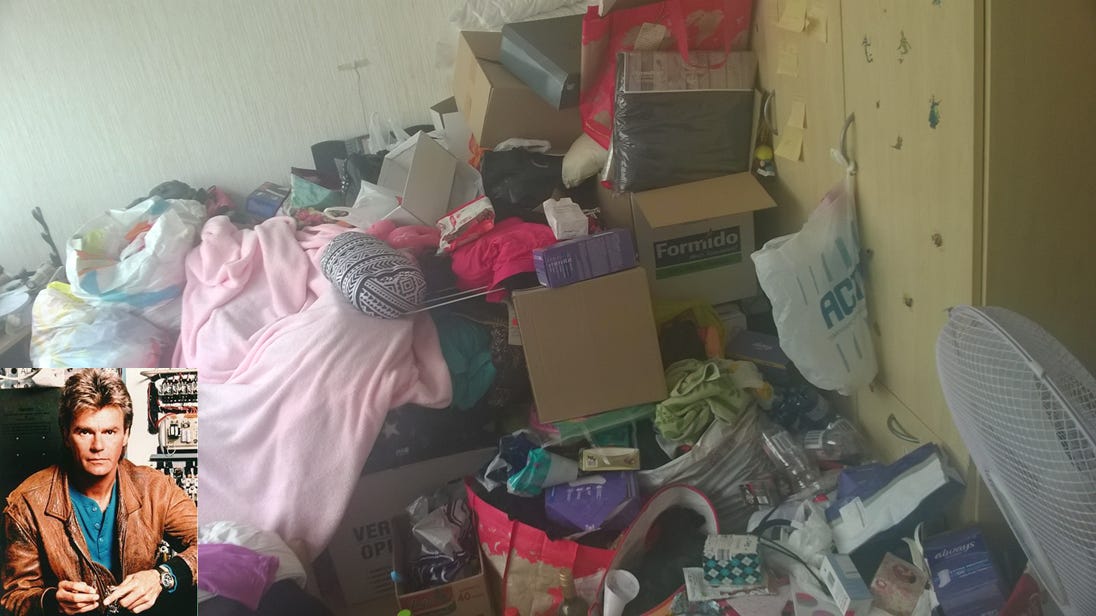
MacGyver only ran for seven seasons. Perhaps they ran out of stuff with which to build. If you only combined MacGyver with the TV show Hoarders, the potential for creativity might be endless.
MacGyver reminds me of one of my favorite movie scenes. Apollo 13 recalls the failed mission to the moon which resulted from an explosion in the oxygen canister connection. A particular situation arose where the carbon dioxide filter in the lunar module needed to be changed. The filters that were equipped were made to handle two astronauts for a limited period of time. With three astronauts sheltering in the module, a solution needed to be found or else the astronauts would die.
In the scene, engineers spread on a table all the available elements in the lunar module and command module. They were MacGyvering a solution before MacGyver. Like with MacGyver, duct tape was involved. As a result of their creativity, they were able to fit a square filter in a round hole, and buy the astronauts time until they could safely re-enter the atmosphere and be rescued.
Obviously, it would have been easier if one of the astronauts had Amazon prime and just could have had a Bezos drone fly up to the module and deliver the proper filter. But we would have been deprived of that great scene in the movie where the engineers get creative and figure things out.
When confronted with limitations, there is a quote from the not-so-great film Heartbreak Ridge, “Improvise. Adapt. Overcome.” We probably didn’t need a film to celebrate the decisive US victory in the invasion of Grenada. Nevertheless, there was that nice quote which has become popularized.
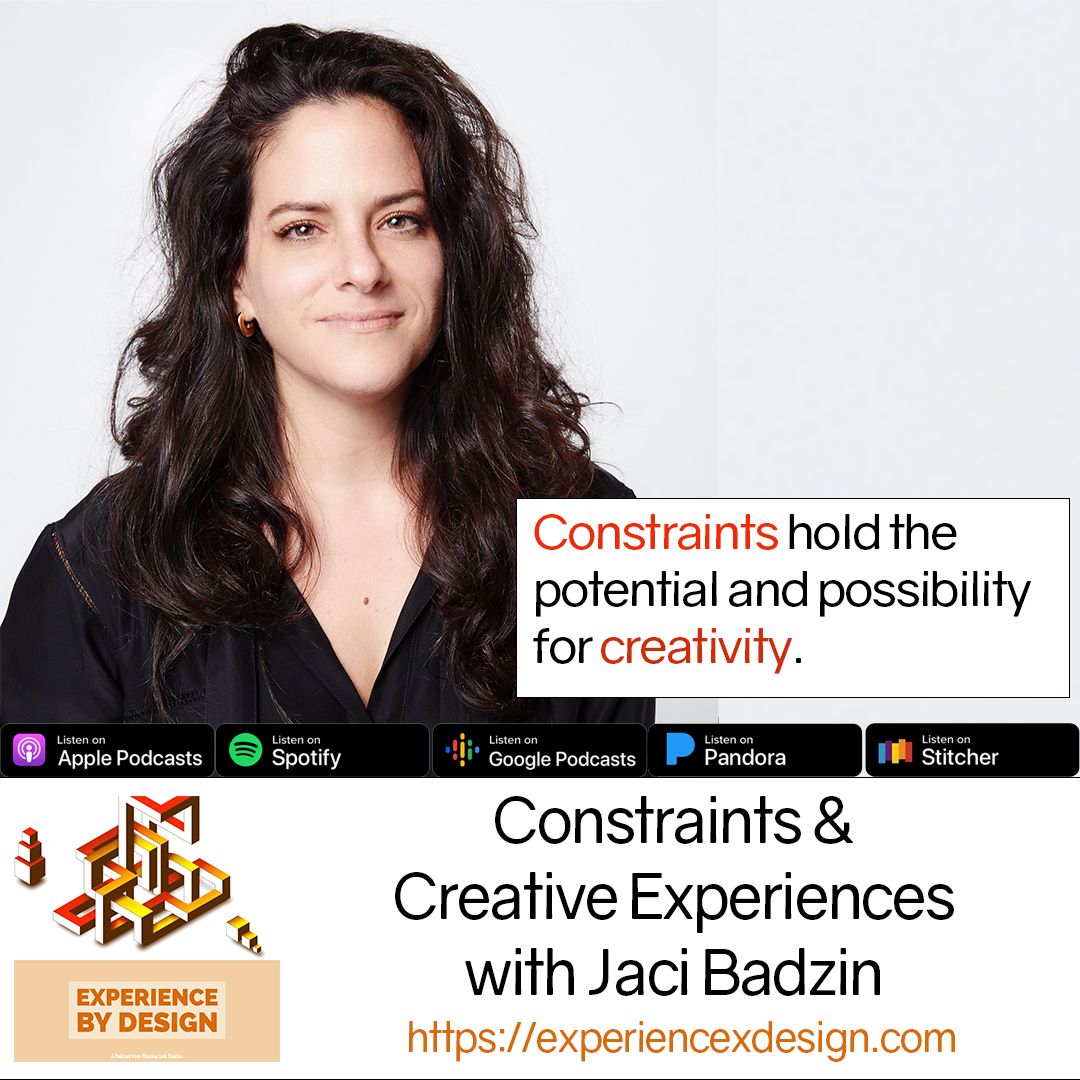
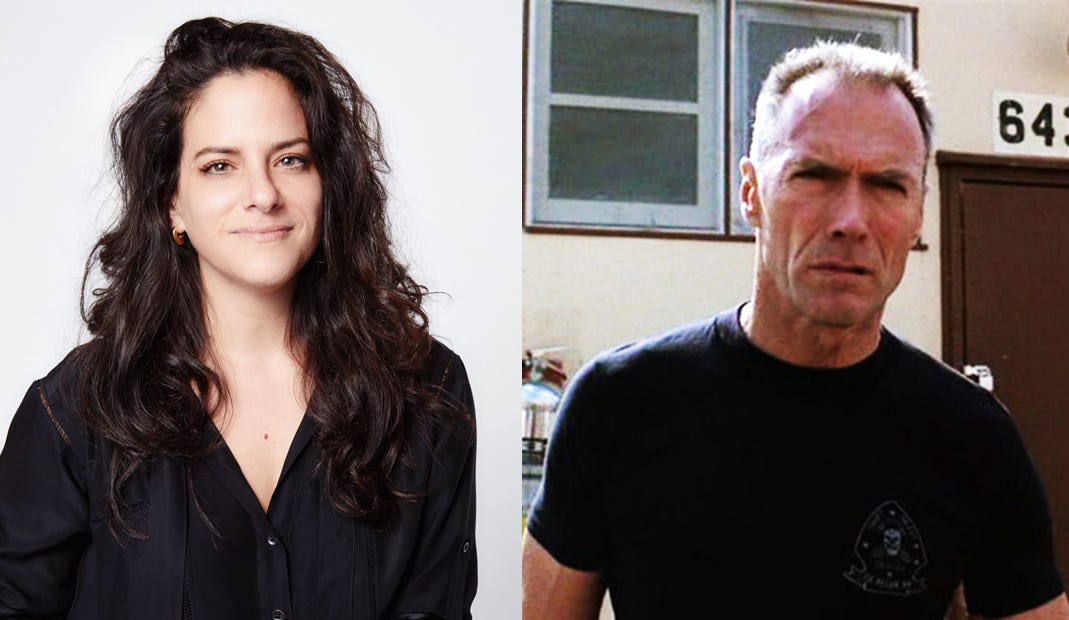
In talking with Jaci Badzin, she might be confused with Clint Eastwood’s character Marine Corps Gunnery Sergeant Thomas Highway in spirit, but definitely not in appearance. Or as she puts it, a conductor of an experience design orchestra where she pulls together the pieces to have them work in unison toward a experiential vision.
Creativity is core to her work, a drive that was born out of her study of choreography and dance. For us non-dancers, one of the fascinating things is how a human body in space can be capable of so many different expressions. The range of that expression is simply limited to the ability of the person and their imagination. One’s creative expression is born through the self in space, emanating from deep within and inspired by things outside. Combing them is the goal.
I once chatted with an art instructor who was vehemently, almost violently, opposed to coloring books. To him, the coloring book is an afront to childlike creativity. When presented with a coloring book, children often feel constrained to replicate the colors that fit the original image. What he would prefer is that children get blank pieces of paper, crayons, and then get turned loose. Keep that imagination going as long as possible. Within the constraints of crayon and paper, there are endless possibilities.
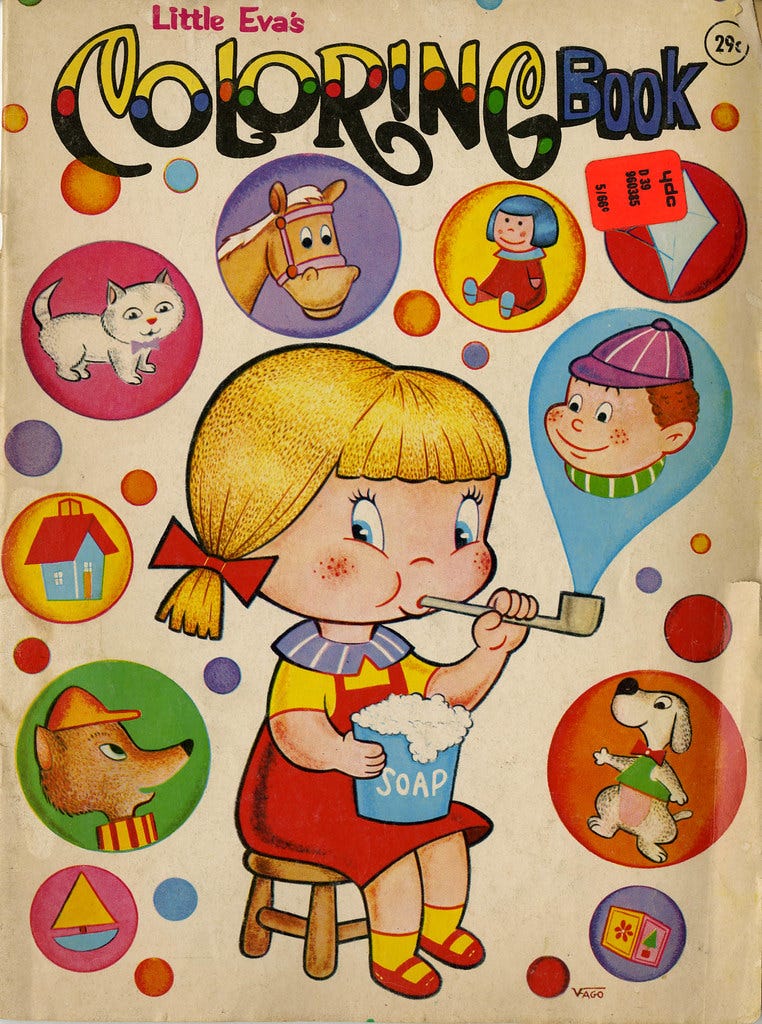
Jaci talks about how she likes to walk into the blank canvas of a space, and using the parameters and guardrails present to inspire creativity. Even though the limitations and parameters might constrain what is possible, there is still plenty of opportunity to color outside the lines.
She reflects on how event design is ultimately about experience design. Thinking through each event into different parts, and each part she pays attention to, is part of the process of exercising that creativity from constraints. There is a need to attend to all the parts in order to create better overall experience design. Even when building with Legos, the smallest pieces can add the most important accents and supports. Each piece is built and designed for a purpose and with intention.
Our conversation with Jaci helped to emphasize and realize that with even the simplest palette, the most basic dance moves, and the most constrained environments, we can still find a pathway for inspired creation.
You can listen to our conversation here: https://www.experiencexdesign.com/episodes/constraints-and-creative-experiences-with-jaci-badzin